





Behind every flawless finish is more than skilled hands and the right paint; it’s clean, consistent air and at the heart of every booth’s performance sits a part that can so easily be overlooked by an operator: the filter
The truth is, the filter you choose plays a direct role in your shop’s efficiency, finish quality, and profitability. The wrong choice can sneak up on you over time, lowering airflow, increasing defects, and quietly pushing your operating costs higher with every job.
Why Filter Choice Isn’t Just a “Detail”
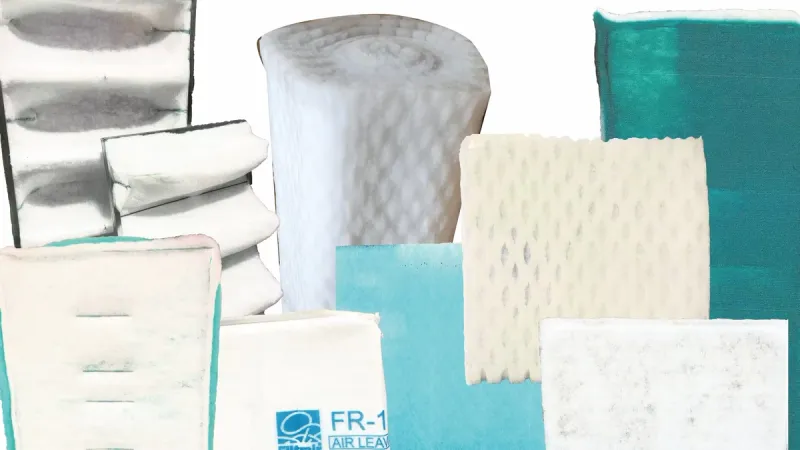
It’s easy to look at filters as a simple expense and as just something cheap and replaceable. But a filter that isn’t suited to your booth, paint type, or production schedule can cost far more than just buying the better quality or right filter for your booth from the get-go. Poor filtration leads to turbulence, dust in finishes, unplanned downtime, and rework costs that add up fast. Think of it this way, too: that “budget” filter might save a few dollars today, only to potentially create thousands in lost throughput and additional labour over the year.
Understanding MERV Ratings
The MERV rating (Minimum Efficiency Reporting Value) measures how well a filter captures airborne particles, from large dust and overspray down to submicron contaminants. It’s a 1–20 scale. The higher the number, the finer the filtration and the greater the resistance to airflow.
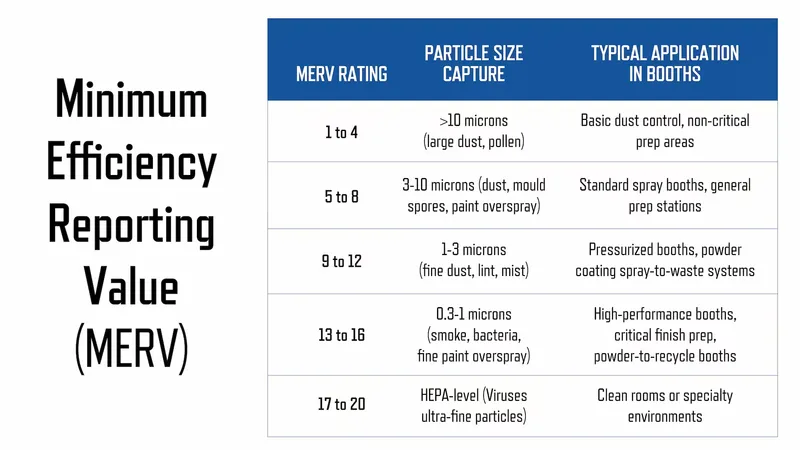
Most paint booths operate best in the MERV 8–13 range, depending on the booth’s configuration, production volume, and finish requirements.
When Filters Clog, Performance Falls
When a filter begins to clog, it triggers a domino effect across your system. When clean, airflows as it should, but when airflow becomes restricted, it forces fans to work harder, which in turn raises energy use and stresses motors and bearings. Even if the additional strain is hardly measurable, it all adds up and can severely reduce the overall life span of parts, and that can really hurt a shop’s bottom line, versus spending a bit more for the best quality and right filter for their setup. Air turbulence inside the booth increases, allowing overspray and dust to settle on wet surfaces. That means more sanding, more reworks, and more time lost.
Industry data shows that operating with clogged filters can potentially cut booth output by up to 20%. For a shop running ten jobs a day, that’s two full jobs lost daily, and that’s capacity for work that directly hits your revenue.
Matching the Filter to the Operation
No two booths run exactly the same, which means there’s no “one size fits all” filter rating, so the right choice depends on various factors related to your setup:
Paint Type: Solvent-based coatings produce heavier overspray, requiring higher-efficiency filters (usually in the 12-13 range), while waterborne and powder coatings behave differently, and can operate with more mid-range filters within the 8-11 rating range.
Booth Design: Downdraft and crossdraft systems manage airflow in distinct ways, so resistance tolerances vary. Downdraft, for example, typically requires more heavy-duty ceiling-mounted filter systems (11-13), while crossdraft typically wants a lower resistance filter for a more balanced airflow.
Production Volume: High-use booths saturate filters faster and need either higher-capacity or more frequent replacements. In this instance, the micron rating still matters, but more about buying the right filter that will last and not require frequent servicing or replacement.
Quality Expectations: From prep work (8-10) to show-quality finishes (13-16, to control finer particles). Your standards for quality ultimately determine your filtration baseline here, but depending on the work at hand, you don’t need to default to the highest performance, most expensive option.
At Alberta Booth, we group our filters into three clear performance tiers:
Essential: MERV 8–11 – general prep and standard spray.
Advanced: MERV 12–13 – improved quality and higher production.
Elite: MERV 13–16 – critical finishes and performance-driven operations.
Again, it isn’t about which grade is “best.” It’s about choosing the right one for your operation’s demands and budget.
Looking Beyond the Price Tag
The true cost of a filter isn’t what’s printed on the invoice; it’s the long-term impact on your energy consumption, equipment life, and finished quality. A premium MERV 12 filter that lasts ten weeks can be cheaper in the long run than a bargain option that clogs every second week, and causes numerous reworks to achieve the end result you or the client wanted. Shops that stay profitable treat filter selection and maintenance as a strategic process. They monitor pressure differentials, replace filters on schedule, and source quality filters that match their airflow specs.
At Alberta Booth, we carry a full line of filters across every MERV range: intake, exhaust, fibreglass, and make-up air. Our team helps you identify the right filter setup for your booth type, paint process, and production goals. If you’re not sure what your current filters are really costing you, reach out. We’ll help you find the right balance between performance and efficiency, so every job coming out of your booth looks as clean as it should.